
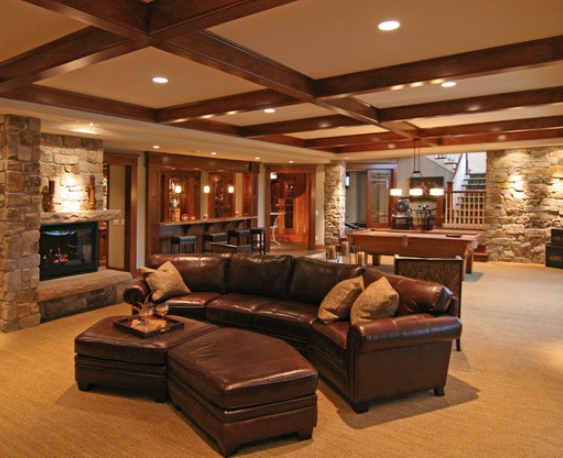
Basement home theater setups prioritize dense, damped walls and restrained lighting to curb reflections and noise. Layouts balance seating sightlines with compact cabinetry, while screen placement minimizes cabinet resonance in tight rooms. Soft imaging and modular storage create a cohesive, scalable feel. Budget-friendly acoustics and DIY fixes offer practical gains without sacrificing atmosphere. The space invites thoughtful tweaks that promise clearer signals and calmer spectators, inviting continued exploration of how small rooms achieve big cinematic focus.
What Makes a Basement Theater Truly Cozy and Quiet
Basement theaters achieve true coziness and quiet through deliberate room treatment, sound isolation, and attentive layout. In this secluded environment, soft focus on imaging and restrained lighting foster comfort without distraction.
Echo control emerges as a primary discipline, shaping reflections and dimensionality. Materials are chosen for density and dampening, while geometry minimizes cabinet resonance, contributing a precise, freedom-friendly acoustic signature.
Screen Placement and Acoustics That Win Small Spaces
Screen placement in constrained rooms hinges on targeting optimal sightlines and leveraging wall space for acoustical balance. The layout emphasizes a precise seating arrangement, compact shelving for storage solutions, and ambient lighting that reduces glare while enhancing depth. Acoustics optimization relies on small space acoustics strategies, budget friendly upgrades, and DIY hacks to achieve clean, distraction-free sound without clutter.
Seating, Lighting, and Storage for Maximum Comfort
Effective seating, lighting, and storage design for a basement home theater prioritizes comfort without compromising spatial efficiency: seating should support long viewing sessions with appropriate pitch and legroom, lighting must balance brightness for navigation with dimmable, glare-reducing controls to preserve screen contrast, and storage ought to be discreet, accessible, and scalable to accommodate media, peripherals, and decor.
seating comfort, lighting ambiance.
Budget-Friendly Upgrades and DIY Hacks for Impact
Smart budgeting and clever DIY tactics can yield noticeable theater upgrades without a large capital outlay, prioritizing impact through efficiency and thoughtful detail.
The section explores budget friendly materials, repurposed components, and calibrated acoustics to maximize signal clarity.
Practical diy hacks emphasize modular projects, finish consistency, and cable management, delivering aesthetic cohesion while preserving room freedom and functional performance.
Frequently Asked Questions
What Are Common Moisture and Humidity Concerns for Basements?
Common moisture and humidity concerns in basements involve condensation, mold growth, and damp air. Humidity concerns arise from poor ventilation; basement vents should be integrated with dehumidification strategies to maintain stable, comfortable conditions and protect finishes and equipment.
How Do You Handle Soundproofing for Shared Walls?
Soundproofing for shared walls employs resilient channels, mass-loaded vinyl, and staggered stud layouts. It emphasizes airtight interfaces, decoupling, and acoustic caulking. Soundproofing techniques and shared wall strategies balance performance with aesthetic integrity for freedom-seeking occupants.
See also: What Is DeFi and How Does It Work?
What Is the Best Projector vs. TV for Low Ceilings?
A projector vs TV choice hinges on ceiling height considerations; for low ceilings, a short-throw projector often yields a larger image without obstruction, while a quality LED TV minimizes throw distance and maintains brightness in compact spaces.
Which Renovation Permits Are Typically Required for Basements?
As a starting point, permits are typically required for basement renovations. Permits overview and Renovation compliance guide the process, ensuring structural and egress safety. This proposal emphasizes meticulous planning, code adherence, and freedom within aesthetic, technical, and practical constraints.
How Can You Improve Resale Value With a Theater Space?
To improve resale value with a theater space, an optimized theater design emphasizes acoustically treated rooms, quality seating, discreet wiring, and flexible layout. Resale value benefits from timeless finishes, soundproofing, and durable, low-maintenance materials that appeal to freedom-loving buyers.
Conclusion
In a basement theater, comfort and quiet arise from deliberate materials, measured geometry, and restrained ambience. The space layers sound-dampening surfaces with thoughtful seating geometry, ensuring clear sightlines and intimate imaging. Lighting stays soft, storage remains unobtrusive, and modular elements adapt to changing needs. Aesthetics meet physics: precise acoustics, balanced reflections, and low cabinet resonance. Anachronistic spark: a vintage projector hums softly as the future-ready screen blooms. Result: cohesive, scalable, low-distraction home cinema that endures.
