
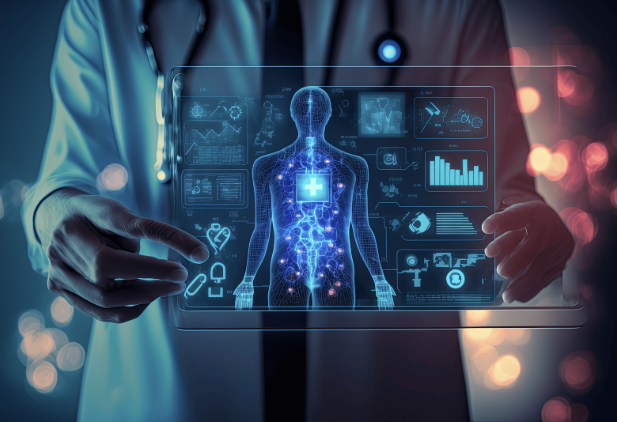
AI applications are fundamentally reshaping healthcare and medicine. These technologies enhance diagnostic accuracy, streamline patient management, and accelerate drug discovery processes. By leveraging machine learning and predictive analytics, healthcare providers can implement more effective treatment plans and improve patient outcomes. As AI continues to develop, its potential impact on the industry raises important questions about future trends and ethical considerations that warrant further exploration.
How AI Is Transforming Diagnostics in Healthcare
The integration of artificial intelligence (AI) into healthcare has heralded a transformative era in diagnostics, significantly enhancing accuracy and efficiency.
Machine learning algorithms analyze vast datasets, identifying patterns that traditional methods may overlook. Predictive analytics further empowers clinicians by forecasting disease progression, enabling timely interventions.
This evolution not only improves diagnostic precision but also fosters a more proactive approach to patient care, promoting autonomy in health management.
Enhancing Patient Management With AI Technologies
AI technologies extend their impact beyond diagnostics, significantly enhancing patient management across various facets of healthcare.
Through AI monitoring and predictive analytics, healthcare providers can optimize workflows and improve data management.
Personalized treatment plans, facilitated by virtual assistants, foster greater patient engagement.
Additionally, remote consultations enable timely interventions, ensuring that patient care remains effective and tailored to individual needs, ultimately improving overall health outcomes.
The Role of AI in Drug Discovery and Development
Transforming the landscape of drug discovery and development, artificial intelligence empowers researchers to streamline processes and enhance efficiency.
By leveraging machine learning algorithms and predictive modeling, AI accelerates the identification of potential drug candidates, optimizes lead compounds, and predicts clinical outcomes.
This integration fosters innovation, reduces costs, and ultimately enhances the speed at which new therapeutics can reach the market, benefiting patient care significantly.
See also: allherejob
Future Trends: What’s Next for AI in Medicine?
As advancements in technology continue to reshape the healthcare landscape, the future of artificial intelligence in medicine appears promising and multifaceted.
Predictive analytics will enhance diagnosis and treatment planning, allowing for more accurate patient assessments.
Moreover, the integration of AI into personalized treatment regimens will empower healthcare providers to tailor interventions, improving outcomes while fostering patient autonomy in managing their health.
Conclusion
In conclusion, the integration of AI in healthcare is not merely a trend but a transformative force reshaping diagnostics, patient management, and drug discovery. While concerns about data privacy and the reliability of AI systems persist, envisioning a future where healthcare professionals collaborate seamlessly with intelligent algorithms can alleviate these fears. As AI technologies advance, they promise to enhance the precision of treatments and streamline processes, ultimately leading to improved patient outcomes and a more efficient healthcare system.
