AI applications in smart transportation systems are reshaping urban mobility. By employing predictive analytics, these technologies enhance traffic management and optimize public transport efficiency. Furthermore, advanced algorithms contribute to improved road safety by assessing accident risks. As cities evolve, the integration of AI raises essential questions about the future of urban transportation and its implications for sustainability and user experience. What innovations will emerge next in this rapidly evolving landscape?
How AI Optimizes Traffic Management and Flow
As urban populations continue to grow, the complexity of traffic management becomes increasingly challenging; however, the integration of artificial intelligence (AI) technologies offers promising solutions.
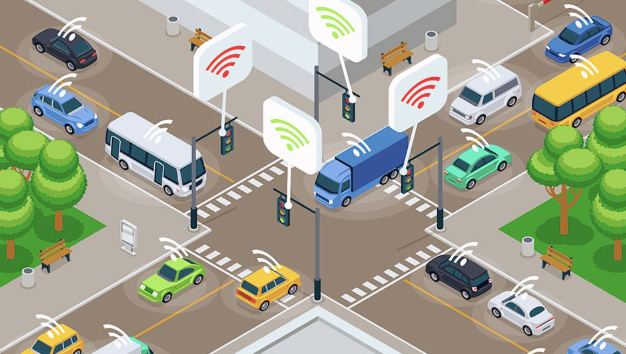
AI enhances traffic prediction capabilities, enabling municipalities to forecast congestion patterns accurately. This proactive approach facilitates congestion alleviation, allowing for real-time adjustments in traffic signals and routing, ultimately improving overall flow and reducing delays for commuters seeking freedom of movement.
Enhancing Public Transportation With AI Solutions
While public transportation systems face increasing demands for efficiency and reliability, the application of AI solutions presents a transformative opportunity.
Predictive analytics enables transit agencies to forecast passenger volumes, enhancing capacity planning. Meanwhile, route optimization algorithms streamline service routes, reducing travel times and operational costs.
Together, these AI-driven strategies foster a more responsive and efficient public transportation network, ultimately empowering user freedom and accessibility.
AI’s Role in Improving Road Safety and Reducing Accidents
The integration of artificial intelligence into road safety initiatives represents a pivotal advancement in accident prevention and traffic management.
Through sophisticated accident prediction algorithms and safety analytics, AI systems can analyze vast datasets, identify high-risk areas, and recommend preventive measures.
This data-driven approach enhances situational awareness, ultimately fostering a safer driving environment and significantly reducing the likelihood of accidents on the road.
See also: AI Applications in Healthcare and Medicine
The Future of Urban Mobility: Trends and Innovations in AI Transportation
Advancements in artificial intelligence are not only reshaping road safety and accident prevention but also paving the way for innovative urban mobility solutions.
The emergence of autonomous vehicles will transform personal and public transport, while smart logistics systems enhance efficiency in freight movement.
These technologies promise to optimize traffic flow, reduce congestion, and provide users with greater freedom in navigating urban environments.
Conclusion
In the rapidly evolving landscape of urban mobility, AI applications in smart transportation systems are not merely enhancements; they are revolutionary forces destined to redefine the very fabric of city life. By seamlessly integrating predictive analytics, autonomous vehicles, and advanced safety protocols, AI promises to eradicate traffic congestion, eliminate accidents, and propel public transit into an era of unparalleled efficiency. The future of urban transportation stands on the brink of a breathtaking transformation, heralding a utopia of mobility that was once relegated to the realm of science fiction.