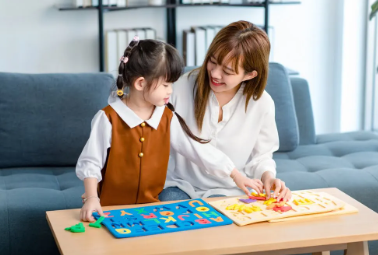
Children learn naturally when they are given opportunities to explore, experiment, and solve problems. Handheld puzzle games are a simple way to combine these activities with entertainment. Unlike passive forms of entertainment, puzzle toys encourage children to interact with objects, make decisions, test different solutions, and stay focused on a specific challenge. This makes them useful for families, educators, and businesses looking for engaging educational toys.
What Makes Handheld Puzzle Games Different?
Handheld puzzle games are designed to be small, interactive, and easy to use. They can involve sliding pieces, arranging shapes, solving mazes, remembering patterns, or completing logical sequences. Because the player directly controls the game, every decision can influence the result.
This hands-on format gives children an opportunity to learn through trial and error. If one approach does not work, they can try another. Instead of simply receiving an answer, they participate in the process of finding it.
The portability of these games is another advantage. A child can enjoy a puzzle at home, during travel, in a classroom, or during quiet activity time without needing a large play area.
Encouraging Logical Reasoning
Logic is an important part of many puzzle games. Children need to examine the available information, consider different possibilities, and decide which action should come next.
Sliding puzzles are particularly useful for this type of thinking. Moving one piece can change the position of several other pieces, meaning players need to think beyond the immediate move. They may need to plan several steps ahead before reaching the final solution.
Smart Tomato’s educational toy range includes the DD-03 Electronic Huarong Road, which places the traditional Huarong Road puzzle into an electronic format. The product is designed for children aged 3–12 and focuses on logical thinking, spatial cognition, and persistence when facing challenges.
Developing Spatial Awareness
Spatial awareness involves understanding the position, movement, and relationship between objects. Puzzle games that require players to move or rearrange pieces can provide children with opportunities to practice these skills.
In Huarong Road, for example, the player must understand how different blocks occupy space and determine how they can be moved to create a path for the target piece. Every move changes the available space, encouraging the child to visualize possible outcomes.
This type of activity can make abstract concepts more concrete because children can physically see and manipulate the pieces involved in the problem.
Building Patience and Persistence
Not every puzzle can be solved immediately. Some challenges require multiple attempts before the correct solution becomes clear. This can make puzzle games a useful way to introduce children to persistence.
When a child makes an unsuccessful move, they can review what happened and try a different strategy. Completing the challenge after several attempts can provide a strong sense of accomplishment.
Smart Tomato describes the Electronic Huarong Road as part of its logical reasoning category, with an emphasis on logical thinking, spatial cognition, and frustration resistance.
Interactive Learning Without Traditional Screens
Parents increasingly look for activities that can keep children engaged without depending entirely on phones, tablets, or video content. Electronic puzzle toys can provide an alternative form of interactive entertainment.
The Smart Tomato product line emphasizes “education through play” and combines interactive features with educational objectives. Its products are developed for different areas of children’s cognitive development, including language, scientific thinking, logical reasoning, and concentration.
An electronic puzzle can therefore provide some of the engagement associated with technology while still requiring the child to actively solve a physical challenge.
Suitable for Different Learning Environments
Handheld puzzle games can be useful in several environments. At home, parents can use them as independent or family activities. In preschools and schools, puzzles can supplement classroom activities and provide children with hands-on problem-solving exercises.
They can also work well in after-school programs, activity centers, and educational events. Because they are portable, they can be incorporated into different activity stations without requiring extensive preparation.
Smart Tomato specifically identifies home learning, kindergartens and preschools, after-school programs, gifts, and events among the potential usage scenarios for its educational toy products.
Choosing a Good Puzzle Game
When selecting a handheld puzzle, it is important to consider the child’s age, ability, interests, and preferred level of challenge. A puzzle that is too easy may quickly become boring, while one that is too difficult can discourage the player.
Progressive difficulty can be particularly useful because it allows children to develop their skills gradually. Durability, portability, ease of use, and clear feedback are also important considerations for a toy that may be used regularly.
For educational toy businesses, customization can be another factor. Smart Tomato offers OEM/ODM services covering areas such as colors, packaging, design, and mold development, supporting businesses that want products adapted to their market.
Conclusion
Handheld puzzle games can turn everyday play into an opportunity for active learning. Through activities involving movement, strategy, and problem-solving, children can practice logical reasoning, spatial awareness, concentration, patience, and persistence.
Electronic puzzles such as the Smart Tomato Electronic Huarong Road demonstrate how a classic puzzle concept can be combined with modern interactive features. Whether used at home, in educational settings, during travel, or as part of an educational toy collection, handheld puzzles can give children an enjoyable reason to think, experiment, and keep trying until they discover the solution.